Please Help
Medical ID & dementia bracelets

If they can't tell someone who they are, the band does it for them.

A plain silicone wristband with a chip in it. Anyone who finds them holds a phone against it, or scans the code printed on it, and a page opens: their name, what they live with, what a stranger needs to know, and who to ring. Nothing to download. Nothing to charge.

£29.99 a year or £99 once, bracelet included — the price when bands go on sale. Setting an account up takes about three minutes and there is no app for anyone to install.

An older woman at her kitchen table holding a mug of tea, a Please Help band with a QR code on her wrist
Worn every day.
Only matters on one of them.

Let us be straight about what this is

You will be offered a lot of things that promise to keep someone safe. Most need charging, or the person to press a button at the worst possible moment. This one does not — and we would rather be straight about what it does and does not do.

  • It is not a trackerIt cannot show you where they are. It has no GPS. Their location only ever reaches you if a real person finds them and chooses to share it.
  • It is not an alarmIt cannot call anyone by itself. It cannot detect a fall. If nobody finds them, it does nothing at all.
  • It has no batteryNothing to charge, nothing to remember, nothing to run flat on the one day it matters. It works the same in five years as it does today.
  • They need no phone of their ownThey do not need to carry a phone, charge anything, or understand any technology. The band is the whole thing. The finder's phone does the work.
  • Nobody comes out to themWe are not a rescue or collection service. Nobody is sent anywhere. We are the software that puts their details on a stranger's phone.
  • It needs a stranger to stopSomeone has to notice the band and choose to help. That is goodwill. We cannot promise it, only make sure everything is ready when it happens.

So what does it actually do? It removes the guesswork from the minutes after somebody is found. The stranger who stops, the shopkeeper, the police officer, the paramedic: instead of an unidentified person who cannot explain themselves, they have a name, a condition, a medication list and your phone number within seconds. That is the whole job — what we are and are not responsible for is set out in full in our terms.

Who it is for

Anyone who might one day be found by a stranger who has no idea what they need. It is not about managing less. It is about the minutes after something happens.

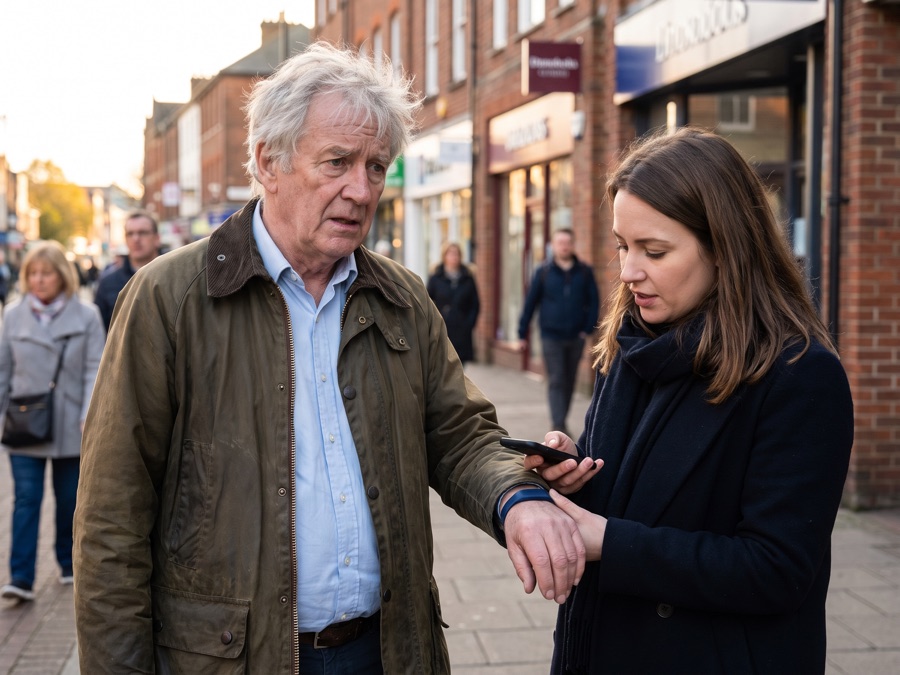
  • An older man on a high street having the band on his wrist scanned by a passer-by

    Dementia and memory loss

    For the person who walks further than they meant to and cannot find the words to explain where they live. Diagnosed or not — a lot of families are living with this long before anyone puts a name to it.

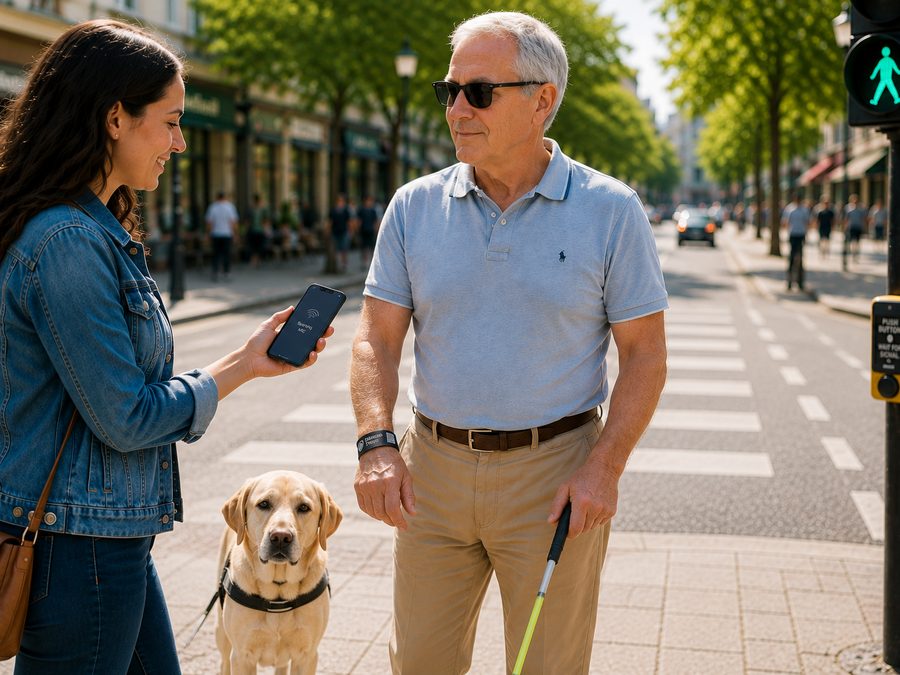
  • A man with a white cane and guide dog having his wristband scanned

    Blind and low vision

    Independence is the point. But if a fall puts a phone out of reach, whoever arrives still knows who to call.

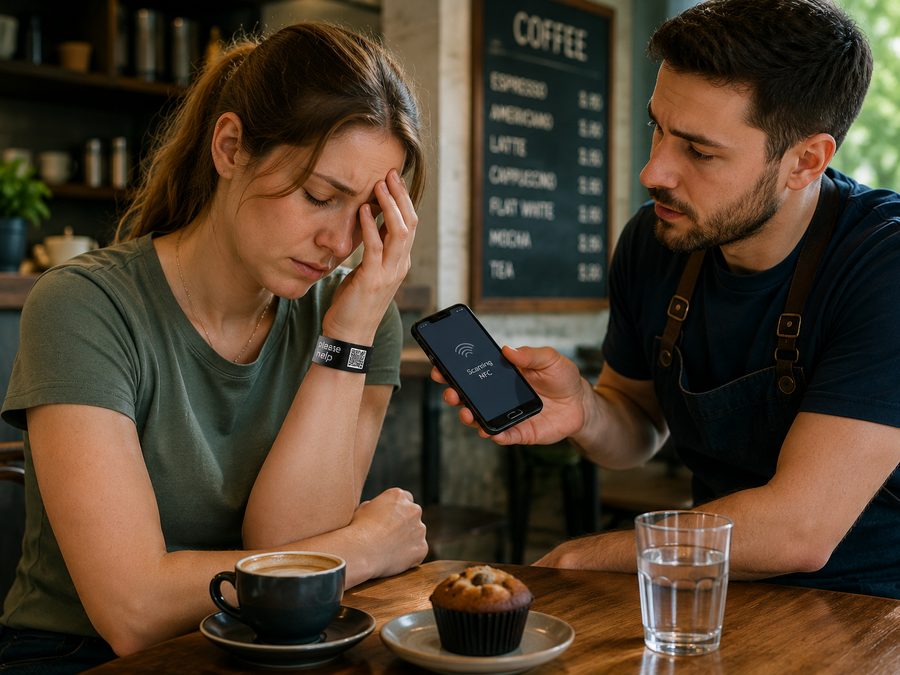
  • A woman unwell at a cafe table, a member of staff scanning her band

    Epilepsy, diabetes, allergies

    The conditions where the right information in the first two minutes changes what happens next.

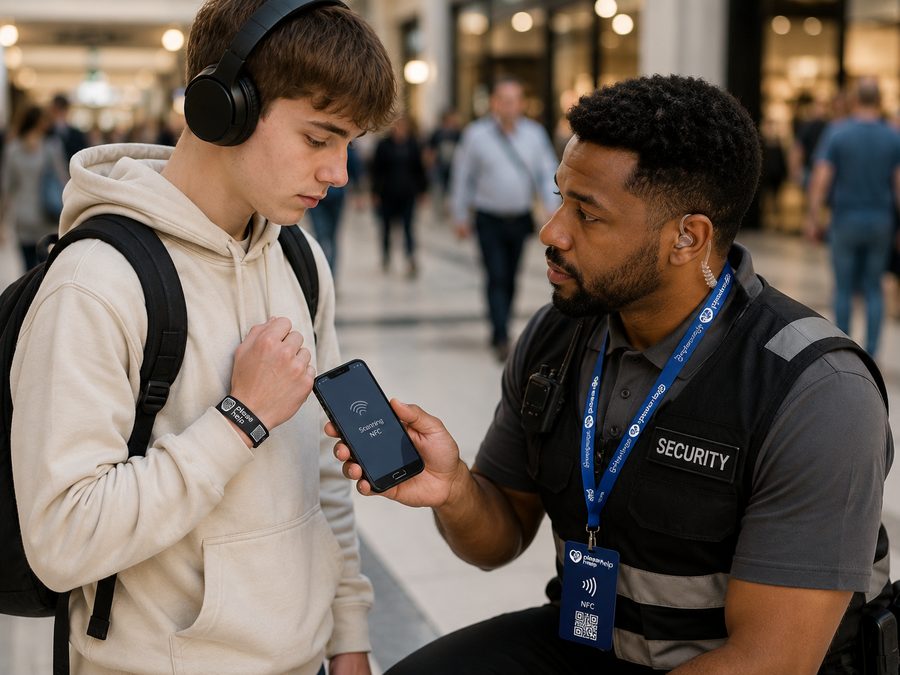
  • A young man in a shopping centre having his wristband scanned by security

    Autism and learning disability

    For anyone who may not speak to strangers, or who finds being questioned in a crowd overwhelming.

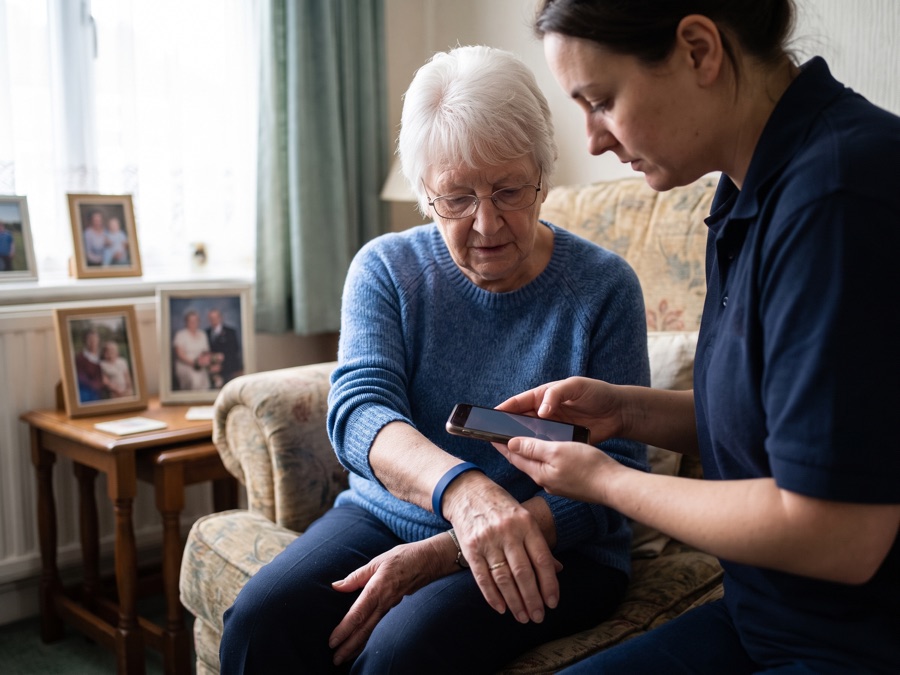
  • An older woman at home with a carer scanning the band on her wrist

    Frailty and falls

    Living alone, unsteady, or simply older. A fall in the street should not also be an identity puzzle.

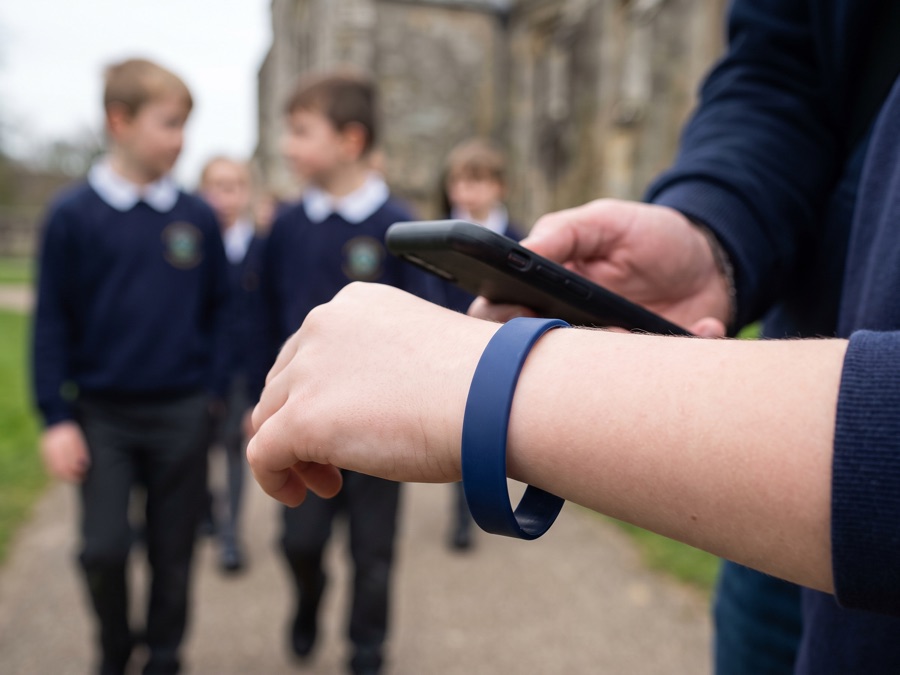
  • A child's wristband being scanned by a teacher on a school trip

    Children

    For days out, holidays and school trips, when the crowd is big and they are small.

Three minutes to set up. Then you forget about it.

That is rather the point. It sits on their wrist doing nothing at all, until the day it matters.

  1. You fill in their page

    Name, the condition a stranger should know about, medication, allergies, and who to call. You decide what appears and what stays private. Change it whenever you like.

  2. They wear the band

    Comfortable, waterproof, no clasp to fiddle with. Two styles, so they can wear whichever suits the day.

  3. Someone finds them

    A tap of a phone, or a scan of the printed code. The page opens instantly. They can call you in one press, or share exactly where they are standing.

What a finder sees

Designed for a worried person holding a phone they have never used for this before. No account. No app. No instructions to follow.

  • It looks like something they can trustA stranger has just tapped a wristband belonging to someone they have never met. The page opens plainly branded, with no sign-up box and nothing to install, so it does not read like a suspicious link.
  • One press to reach youThe finder taps once and their phone dials you. If you would rather they messaged, it can do that instead.
  • They can send you the spotOne button shares their location with you, so you are not trying to describe a street over the phone.
  • A photo, so they know it is the right personA band can be lost, or put on by mistake. The photo lets whoever finds them check they are looking at the person the page belongs to before they act on any of it.
  • However their phone worksThe band carries a chip to tap and a QR code to scan. If tapping does nothing, or they would rather just use the camera, both routes open the very same page.
  • You are told the moment it happensA scan alerts you, and up to five others you add — a daughter, a carer, a neighbour, together. A repeat scan within ten minutes does not send again.
A young man crouching beside an older woman sitting on a step in a town centre, checking his phone after scanning her band

Scroll it — this is a real page, live right now.

See this page in action ↗

You decide what a finder is allowed to see

Every detail you fill in has three settings. A photo is the one exception: add it and finders see it. Everything you fill in is shown by default — hide anything you would rather hold back, and their home address is never shown by default.

  • Always visible

    The things that help immediately

    Their full name, the condition, and how to reach you. Each one can be switched off if you prefer.

  • Only when marked lost

    Held back until you need it

    Medication, allergies, doctor's details. Set a field to this and it stays hidden until you flag them missing — everything you fill in is visible until you do.

  • Hidden

    Stored, never shown

    Anything you want on record for yourself but never on a finder's screen. Or leave it out entirely.

Two bands. The same page.

Both do exactly the same thing, so they can wear whichever suits the day. Labels, stickers, key rings and fobs work the same way, and every one of them points at the same person.

  • The woven band

    A soft fabric strap with the chip sealed into a flat plate. Light enough to forget you are wearing it, and it does not catch on sleeves.

  • The silicone band

    Smooth, waterproof and wipe-clean. Showers, washing up, gardening, the lot. No clasp to fiddle with.

  • Both carry all three

    Both bands are designed to carry a QR code to scan and an NFC chip to tap, so a finder can use whichever their phone manages. We are still settling the artwork with suppliers, so the exact markings may change before the first bands are made.

Two Please Help bands, one fabric and one silicone, both showing the pleasehelp.uk address, a QR code and an NFC tap point

What it costs

Two ways to pay, priced per person rather than per bracelet. Nothing that quietly changes later.

Yearly

£29.99 a year, per person

The bracelet and everything it does. Renews yearly, cancel in one click.

  • One bracelet, posted to you, ready to wear
  • A page you fill in and can change whenever you like
  • An alert when it is scanned, to you and up to five others you add
  • Location sharing and a private thread with whoever finds them
  • A fresh bracelet each year if you want one — just ask

It covers that person, not that bracelet. Add a coat label or a cane sticker later and they open the same page, with nothing more to pay for the service.

For Life no renewals, ever

£99 once, per person

The same thing, paid once. For carers who would rather make one decision and never think about it again.

  • Everything in the yearly plan, permanently
  • No renewal date, no reminder emails, nothing to cancel
  • A replacement bracelet each year on request
  • One extra tag of your choice included when you set it up

Registered to one named person and not transferable. We do not call this a lifetime plan, because it is theirs rather than open-ended.

We are not taking payments yet. There is nothing to buy on this site today and nothing is charged. The prices above are what it will cost when bands go on sale. You can set an account up now, and we will tell you when they are ready.

If you ever stop paying, it does not go dark

Their name, their condition and your phone number stay live on that band permanently, on any band we have ever sold. We think switching that off on a vulnerable person to chase a renewal would be indefensible. What stops is your side of it: you cannot change the details, add a contact, or set up another tag, and scan alerts, location sharing and the finder thread pause until you renew.

More tags for the same person

Spare bands, sew-on and iron-on clothing labels, and stickers for a walking stick or a frame. Bought as and when you want them, and they all bring up the same page. No second subscription.

“I built the first one of these for my dad. He is 85, his memory has been going for a while, and he wanders. I wanted whoever found him to know his name, that he is unsteady on his feet, what he takes, and that they should ring me. That is all it has ever been for.”
Dominic, founder

Help when it matters most

Setting an account up takes about three minutes and needs nothing but an email address. We will tell you the moment bands are ready.

£29.99 a year or £99 once, bracelet included, when bands go on sale. Nothing to pay today. No app to install, nothing to charge, ever.

The questions people actually ask

Including the awkward ones.

Does the person wearing it need a phone?

No. They need nothing at all beyond the band on their wrist. It is the finder's phone that opens the page. This is deliberate: the people who most need this are often the least likely to be carrying a charged phone they can operate under stress.

Does the finder have to download an app?

No, and they never will. The page opens in whatever web browser their phone already has. Asking a stranger to install something before they can help is a good way to make sure nobody helps.

What if the finder has an old phone, or does not know what tapping means?

Every band has a printed code on it as well as the chip. Pointing a camera at it works on effectively any phone made in the last decade. The printed code is there so a finder whose phone cannot tap can still open the page with their camera.

Will it tell me where they are?

Only if somebody finds them and presses the button to share. There is no GPS in the band and there never will be. If they are sitting alone somewhere and nobody comes past, this will not help you, and anyone who tells you otherwise is selling you something different from what they are describing.

What if they take it off?

Then it does not work. It is a wristband, not a restraint. What we can say is that a plain, comfortable band with no screen, no light and no beeping tends to stay on far better than anything that announces itself as a medical device.

Can it get wet?

Yes. Showers, washing up, rain, swimming. There is no battery and no electronics to spoil, which is the quiet advantage of doing it this way.

Who can see their information?

Anyone who has the page's web address, and only the fields you have chosen to show. We do not publish or list that address: there is no directory, search engines are told not to index the page, and it cannot be found by searching for their name. There is no password on it, so a finder who keeps the address could open it again later. Scans are logged so abuse can be traced, and you are alerted when their page is opened. We never work out where a scan happened — a location only reaches you if the finder chooses to send it.

What happens to the data if we stop using it?

You can wipe someone's page at any time: the details, the photo and the finder messages go at once, and anyone who scans the band afterwards sees a blank tag. Copies sit in our routine backups for a few months before rolling off. Email us and we will close the account too. We do not sell data and there is nobody to sell it to.

What does it cost, and what happens if I stop paying?

£29.99 a year with the bracelet included, or £99 once and never again. Both are priced per person, not per bracelet, so a coat label or a cane sticker added later opens the same page with nothing more to pay for the service. If a yearly plan lapses, the important part of their page stays live permanently — their name, their condition and your number — and anyone who scans the band can still call you. What pauses is your side of it: you cannot change the details or add a contact, and scan alerts, location sharing and the finder thread stop until you renew. We are not going to switch off a vulnerable person's band to chase a renewal. The £99 plan never lapses at all. Nothing is on sale yet, so nothing is charged today.

If nobody scans it, or nobody helps, what happens then?

Nothing happens, and we would rather say so plainly. This is a piece of software that shows the details you chose to whoever scans the band. It cannot make anybody notice it, scan it, or help once they have. That last part is goodwill from a stranger, and it is not something we can promise, arrange or be responsible for. There are two other gaps worth knowing about: the finder's phone has to be able to get online, because tapping or scanning opens a web page, so somewhere with no signal the page will not open until they are back in coverage; and if the band is not being worn, it does nothing at all. What we can promise is the narrow bit that is actually ours — that the page is there, that it says what you told it to say, and that it opens fast on a stranger's phone.

Is this a medical device?

No. It displays information that you have written yourself. It does not monitor, diagnose or treat anybody, and it never alerts a doctor, an ambulance or any emergency service. The only people it notifies are you and the contacts you add, when someone opens their page. It is closer to a very well organised note in a coat pocket than to any piece of medical equipment.

Talk to us

We are a small team and we read every message ourselves.

If you are a family weighing this up for someone, a charity or care organisation wondering whether it would help the people you work with, or you have spotted something on this site that is wrong — please tell us. Feedback at this stage is genuinely useful.

You can also email us directly at hello@pleasehelp.uk.

We reply by email, usually within a working day. We will not add you to a mailing list.